
Train Your Winter Racing Skills
Hone Your Racing Skills for Bigger Races
They say that if you don’t use some skills, you could lose them.

Racing is one of those skills.
If you go a long time without racing, you will see that you aren’t quite as sharp as you’ve been in the past.
📌 Before we continue - If you found this post helpful, would you please consider restacking it and sharing it with your audience?
This spreads the word and keeps me writing content that will help you grow as a runner. 🙏
It‘s why high school and college athletes are never far from being race-ready and sharp. They race so frequently throughout the school year that they are always in “race mode”.
The winter season is a great time to work on those racing skills. Why? Because there are low-key options available for the masses.
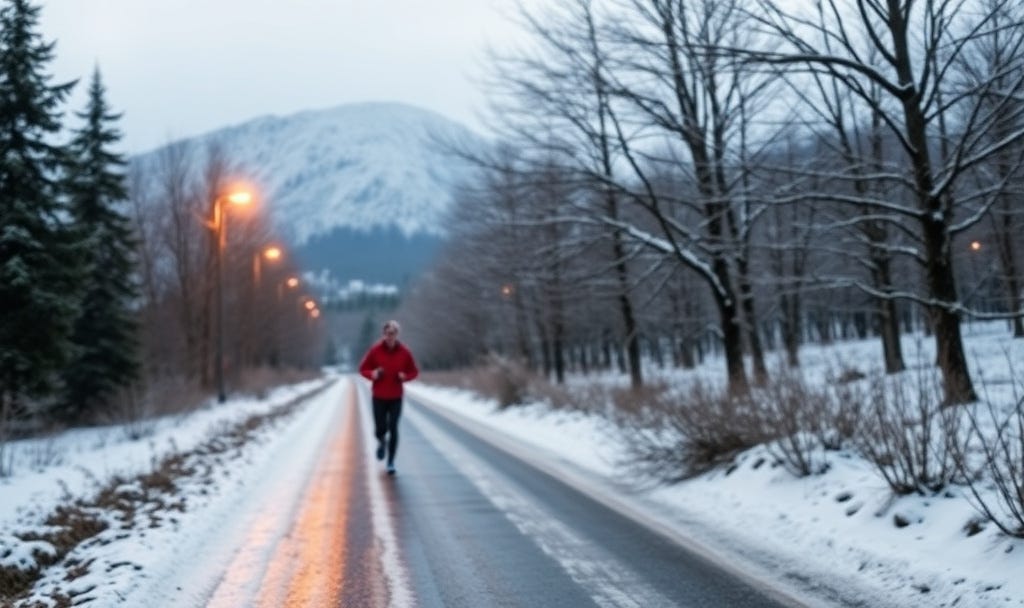
Winter training is hard - but racing can break up that monotony and get you closer to your spring and summer target races.
Outdoor Winter Races
Outdoor races during the winter are doable, but definitely require a little more planning.
You need a very long warmup. You cannot run well if you are cold when you start racing. Use a winter race as a workout and a long run. Take the next day easy to get back into training.
Practice racing skills that you need to work on. 3 skills that most runners can afford to work on:
pacing yourself throughout the race,
going out more aggressively, or
staying patient early in the race.
There are plenty of holiday-themed races to seek out as non-peak, low-stress ways to gauge your fitness. Finding out what kind of shape you are in is crucial to knowing how fast to train on any given day.
Indoor Winter Races
There are also indoor track races, which offer a great change of pace from the traditional long-distance races.
If you’re thinking about running indoor track as an option, check out the Armory in NY, Ocean Breeze in Long Island, the University of Penn’s indoor track facility, or any college meet locally to you. You can visit their sites for cool Open and Master’s races.
Having a short race on the calendar is a great motivator - short enough that you can bounce back quickly, and you can always run more than one race in a night, so you can get decent volume in!
Not to mention, most meets you’ll attend have open and master’s options, meaning the depth of the field should have someone in your racing range.
Adding some indoor track races is a great way to get speed work done while also keeping up on your training.
The downside to racing on an indoor track is the “track hack” you’ll get after racing - that dry air cough that will go away after your cool down.
Another downside is the lack of facilities in close proximity to South Jersey. If you are willing to travel, there are great tracks out there (see above).
I don’t have to tell you what taking a whole bunch of time off would do to your spring races, so you know already that you’ll be training. Consider getting some low-stress outdoor races or some speed work in during a track race.
Thanks for reading. Consider going paid. You can click the link below to get that started.
Do you have questions or want to talk about your training? Send me a message. Seriously. You can send me the most basic question, like “What shoes do I train in right now?” No question is too small.
Strong advice on using winter races as skill maintenance rather than peak performances. The point about high school and college runners staying race-ready through frequent competition is spot-on. I ran track in college and noticed the biggest difference when I graduated wasn't fitness loss but how much longer it took me to get back into race rhythm after months without competiton. Indoor tracks are clutch for this, even if the dry air is brutal on your lungs afterwards.